Claustrophobia and confinement
The Woman in Cabin 10Claustrophobia and confinement are both a recurring physical danger and a means of control in Laura Blacklock’s experience aboard the Aurora Borealis. The ship’s enclosed spaces first provoke fear before they become the setting of her captivity: a dark descent to the spa anticipates the windowless cabin where she is locked below the waterline. The progression makes the vessel’s architecture more than atmosphere. It turns ordinary features—stairs, doors, steel walls, and circulating air—into a tightening measure of how little room Laura has to move, escape, or make herself believed.
Enclosed Spaces and the First Signs of Fear
At the spa, the passage from a bright reception room into narrow, dark stairs is abrupt. Small electric tea lights give off a flickering yellow glow, but Laura finds that they make the surrounding darkness more pronounced. As the ship tilts over a wave, the stairway seems perilous: she imagines that a slight touch from Chloe Jenssen behind her could send her tumbling into Tina West and Eva below. In the dark, even a fall might be mistaken for an accident. The space makes vulnerability feel both immediate and difficult to prove.
The descent ends in a small lobby with no windows. Water trickles over a stone globe in a wall niche, a feature that might be soothing ashore but instead directs Laura’s thoughts toward leaks and emergency exits. She wonders whether they are below the waterline. Her chest tightens; she clenches her fists and tries to keep from panicking. The anxiety is not just a response to darkness. It grows from the ship’s movement, the low ceiling, the enclosed air, and the imagined presence of water on the other side of the hull.
When Laura learns that Anne Bullmer is having a manicure upstairs, she asks whether she can have hers there too. Eva explains that the upstairs room has only one chair and offers to book her in later, or to arrange another treatment. The suggestion of a flotation tank prompts an immediate, loud refusal: Laura cannot bear the thought of lying in a sealed plastic coffin full of water. She follows Chloe and Tina down the corridor to the treatment rooms anyway, trying not to let her phobias interfere with her work. The scene establishes a practical distinction that will matter later: Laura can try to endure an enclosed space when she believes she has chosen to enter it, but the prospect of being sealed in water or unable to leave overwhelms her.
The Locked Cabin Below the Waterline
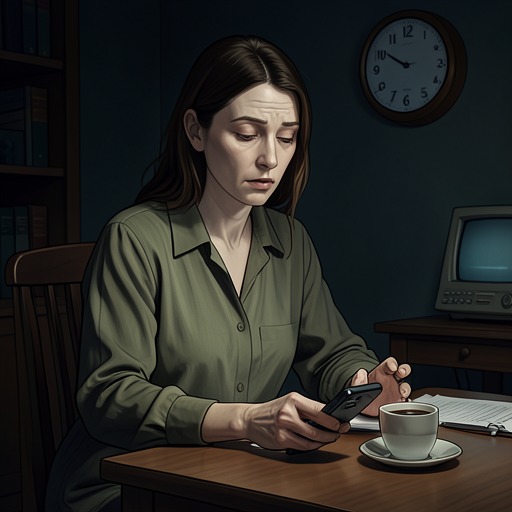
That fear becomes an actual condition when Laura realizes she is trapped. She lies on a bunk in a small, stifling, windowless room, trying to resist panic while replaying the knock that preceded her confinement. When she gets up, one door is locked; another opens only into a minuscule en suite, with a dead spider curled in the washbasin. The en suite offers no escape, only another cramped enclosure within the first.
Laura tests the locked door repeatedly, pulling and rattling it until the effort leaves her panting and slumped on the floor. There is nothing she can use as a lever: the room’s contents are bolted down, screwed in place, or made of fabric. She estimates the cell at about four feet by six and understands it to be well below sea level, with the ship’s steel hull separating her from an immense weight of water. Her headache intensifies as fear rises. The confinement is therefore rendered through both scale and pressure: a tiny room, a stubborn door, and the imagined sea pressing just beyond the walls.
The room also deprives Laura of ordinary ways to measure time and place. She cannot tell how long she has been there; using thirst and stiffness to estimate how long she may have been unconscious, she thinks it is probably still Tuesday, September 22. She hopes Ben Howard will look for her because he knows she intended to go ashore at Trondheim. That hope depends on someone outside the cabin noticing her absence, while the locked door keeps her from acting on it herself.
Later, the engine’s roar helps her infer that the cabin is on an engine deck, perhaps deep in the hull and farther below the waterline than the passenger or staff decks. Darkness compounds the uncertainty: Laura feels her way across the floor with her arms outstretched, imagining frightening figures from childhood nightmares, while recognizing that she has no evidence anyone else is in the room. She searches the blank door for a spy hole and finds none. The room’s lack of visual access works both ways: Laura cannot see beyond it, and whoever controls the door need not reveal themselves.
Captivity, Knowledge, and Control
The cabin confines Laura at the same time that her knowledge places her in danger. She understands that she knows about Anne Bullmer and that Anne is not as ill as she has pretended. Laura fears that those responsible cannot afford to let her leave and tell an account of kidnapping, imprisonment, and bodily harm; she also doubts that anyone would believe her. The threat of confinement thus extends beyond the locked door. Her isolation makes the credibility of her testimony another obstacle to escape.
Her exchange with Carrie exposes the intimate loyalties and expectations sustaining that isolation. Laura warns Carrie that once Richard Bullmer has Anne’s money, his next move may be to make himself safe; Carrie rejects the warning and insists that Richard loves her. The exchange takes place in a little cabin, where Laura tries to hold Carrie’s gaze and make her confront the future she is refusing to consider. In a later confession, Carrie explains that she met Richard at The Magellan, where she was a waitress trying to become an actress. Their relationship was secret because he was married, and she describes believing that Anne’s illness and the couple’s estrangement meant she and Richard would eventually be together.
Carrie then recounts the event that transformed the impersonation scheme into a cover-up. On the first night, as she was changing into her clothes as Anne, Richard arrived and said that Anne had discovered the affair. According to his account to Carrie, Anne struck out, he pushed her away, and she fell and hit her head on a coffee table; he found her dead. He persuaded Carrie that they should dispose of Anne’s body at sea and continue the plan. Carrie says she feared that the truth about her presence and disguise would lead to their prosecution. Laura’s confinement is therefore bound to a wider effort to control what can be known and reported, although Carrie’s account also reveals how Richard’s version of events has shaped her choices.
Narrative and Thematic Significance
The movement from the spa to the locked cabin gives the novel’s enclosed spaces a clear escalation. At first, Laura can leave the treatment corridor, decline the flotation tank, and continue with the work she came to do. In captivity, she cannot open the door, find a tool, see through the walls, or establish the passage of time with certainty. The details are related but not interchangeable: the spa registers anticipated danger, while the cabin converts that fear into physical restraint.
Confinement also narrows the distance between bodily panic and reason. Laura’s fear of water and enclosed spaces is not merely an abstract vulnerability; the cabin places her beneath the sea, where the ship’s hull makes the surrounding water seem almost physically present. Yet she continues trying to estimate the time, locate herself in the vessel, and understand why she is being held. The contrast between a body threatened by panic and a mind working to stay logical gives the scenes their tension.
Finally, the ship’s architecture mirrors the story’s struggle over evidence. A blank door hides what lies beyond it; a windowless room prevents Laura from checking her surroundings; the possibility that no one will credit her makes confinement social as well as spatial. Against that enforced silence, her questions to Carrie and Carrie’s eventual account create a limited opening: information emerges through conversation even while Laura remains physically trapped. The closed cabin is thus both a prison and the setting in which the concealed story begins to come into view.